
It got hard to breathe, and fast.
Maybe it followed an injury, a car crash, a fall, a blow to the chest, or a broken rib. Maybe it happened after a medical procedure, like a line being placed in your chest or being put on a breathing machine. Maybe it came out of nowhere. There was sharp chest pain and a desperate hunger for air. Your heart raced. Maybe your lips or skin started to turn blue. Maybe you felt lightheaded, or like you were slipping into shock. Air was trapped in your chest, and with every breath, the pressure was building and crushing your lung and heart.

Contact Us for a Free, Confidential Consultation
Article written by Brendan Lupetin, Esq. Brendan is a managing partner in the law firm of Lupetin & Unatin, a medical malpractice law firm located in Pittsburgh and serving Western Pennsylvania.
Our practice is limited to high-value catastrophic cases because that is where we can do the most for our clients and for patient safety.
So you got help, or you were already in the hospital. And maybe the danger was not recognized fast enough. Maybe your shortness of breath was blamed on anxiety, asthma, or a panic attack. Maybe the team was focused on other injuries. Maybe no one listened to your chest, or read the signs, or acted on them. The whole time, the trapped air was pushing your heart and windpipe to the side and choking off the blood returning to your heart.
By the time someone recognized it, you may have been in collapse. A tension pneumothorax can cause cardiac arrest and death within minutes if the pressure is not released. Maybe you survived a terrifying emergency. Maybe brain damage resulted from the lack of oxygen and blood flow. Maybe you are reading this because someone you love did not survive. And you cannot stop asking: why didn’t they catch this in time?
That question matters. A tension pneumothorax is one of the fastest-killing emergencies in medicine, and the lifesaving treatment takes seconds. When it is missed or treated too slowly, the harm is often catastrophic and often preventable. This article explains the warning signs that a tension pneumothorax was missed. It explains the serious harm a delay can cause. And it explains what you can do next. If any of this sounds like your story, Lupetin & Unatin is here to help.
What a Tension Pneumothorax Is, in Plain Terms
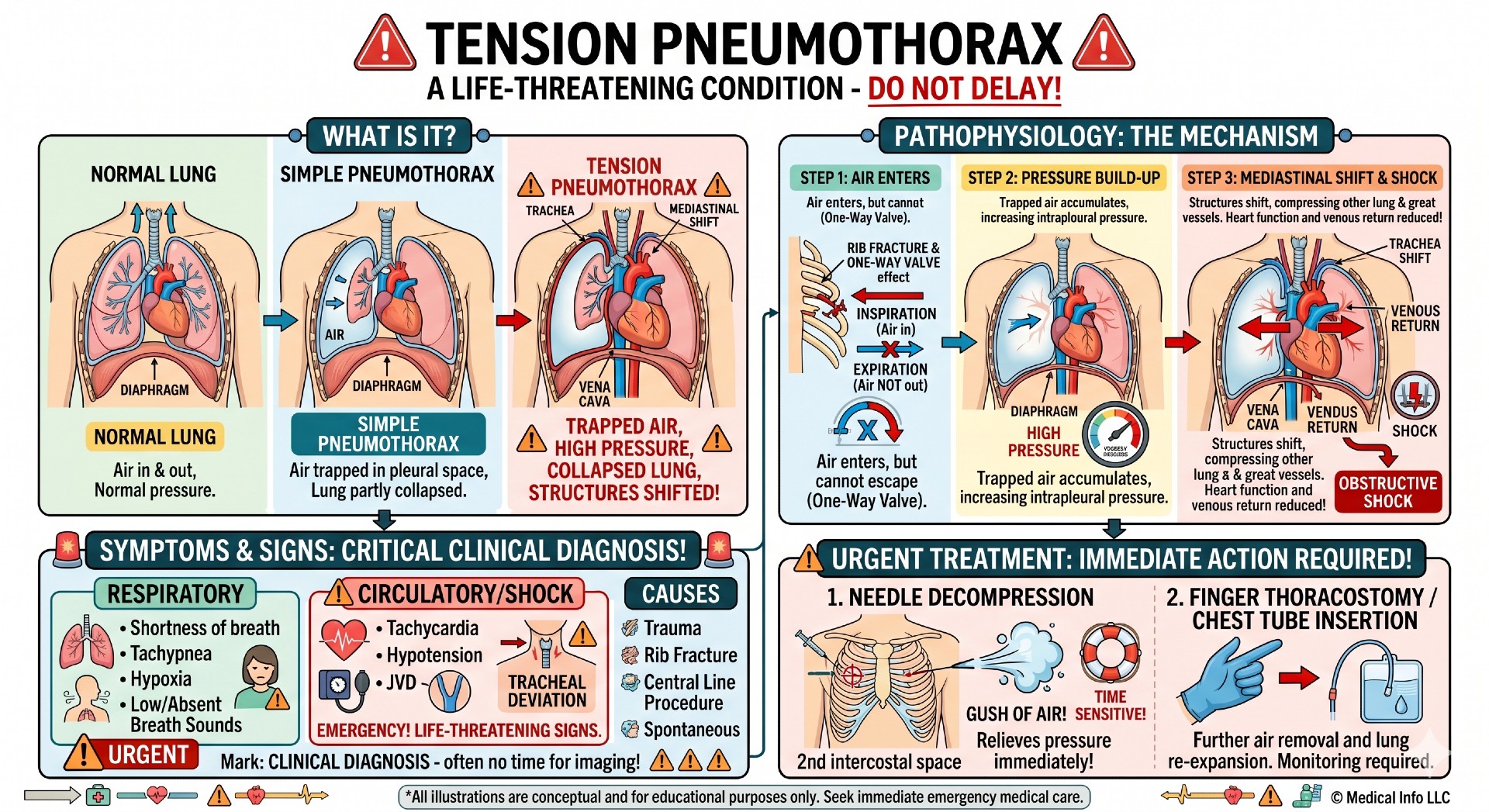
A pneumothorax is a collapsed lung. It happens when air leaks into the space between the lung and the chest wall. A tension pneumothorax is the most dangerous kind. Air keeps entering that space with each breath but cannot escape, like a one-way valve. The pressure builds and builds.
As that pressure rises, it does two deadly things. It collapses the lung, and it pushes the heart and the major blood vessels to the other side of the chest. As the Cleveland Clinic explains, a pneumothorax is a medical emergency, and you should go to the nearest emergency department for symptoms like trouble breathing, chest pain, or blue skin, nails, or lips. In a tension pneumothorax, the rising pressure chokes off the blood returning to the heart, which can quickly cause shock and cardiac arrest.
The key word is time. A tension pneumothorax can kill within minutes. The lifesaving treatment is fast: a needle or tube is placed into the chest to release the trapped air, followed by a chest tube. Because it moves so fast, this is often a diagnosis doctors are supposed to make from the bedside signs and treat immediately, without waiting for imaging.
Why a Tension Pneumothorax Gets Missed
A tension pneumothorax can be missed because its early symptoms, shortness of breath and chest pain, can look like other things, like anxiety, asthma, or a heart problem. In a badly injured patient, it can be overlooked while the team focuses on other injuries. And because it develops fast, a patient who looked stable can deteriorate in minutes.
But doctors are trained to recognize it quickly, especially after trauma or a chest procedure. The warning signs are severe shortness of breath, chest pain, a fast heart rate, low blood pressure, and decreased or absent breath sounds on one side. As the medical literature emphasizes, a strong suspicion of tension pneumothorax should prompt immediate treatment and should not be delayed by imaging. When a provider fails to recognize the bedside signs, or waits too long for an X-ray while the patient crashes, a rapidly fatal emergency can be missed.
Here are the common reasons a tension pneumothorax gets missed:
- Shortness of breath was blamed on anxiety, asthma, or a panic attack.
- The danger was overlooked while the team focused on other injuries.
- No one listened to the chest or noticed absent breath sounds on one side.
- The team waited for an X-ray instead of treating the obvious emergency.
- It developed after a procedure (a line or a ventilator) and was not suspected.
- A simple pneumothorax was not watched and progressed to a tension pneumothorax.
The Warning Signs Doctors Are Supposed to Recognize
These are the warning signs of a tension pneumothorax. They are the same signs a careful provider should act on immediately, especially after chest trauma or a procedure.
- Sudden, severe shortness of breath. A desperate struggle to get air.
- Sharp chest pain. Often on one side, sometimes spreading to the shoulder or back.
- A fast heart rate and low blood pressure. Signs of the heart being squeezed.
- Decreased or absent breath sounds on one side. A key exam finding.
- Blue lips or skin. A sign of dangerously low oxygen.
- Neck veins that bulge, or a windpipe pushed to one side. Late and ominous signs.
- Rapid decline toward collapse or shock. The emergency that demands instant action.
When these signs are present, a careful provider should treat a tension pneumothorax immediately by releasing the trapped air, not wait for tests. When these signs were missed or the response was too slow, the diagnosis may have been missed.
Signs Your Tension Pneumothorax Was Missed
Below are the red flags. If you recognize several of these, it may be worth a closer look at the care that was given.
Your Shortness of Breath Was Blamed on Anxiety or Asthma
Severe shortness of breath after trauma or a procedure is a warning sign, not a panic attack. If you could not breathe and were told it was anxiety or asthma without a real evaluation, that is a major red flag.
The Danger Was Overlooked During Trauma Care
In a badly injured patient, a tension pneumothorax can be missed while the team focuses elsewhere. If your collapsing lung was found late because attention was on other injuries, that delay is worth examining.
No One Examined Your Chest
A basic exam, listening to the chest, can reveal absent breath sounds on one side. If no one examined your chest while you struggled to breathe, a key chance to catch the emergency was lost.
The Team Waited for an X-ray While You Got Worse
A tension pneumothorax is often a diagnosis to treat at the bedside, immediately. If the team waited for imaging while you slipped toward collapse, that delay can be deadly.
It Followed a Procedure and Was Not Suspected
Placing a chest line or being on a ventilator can cause a pneumothorax. If you developed severe breathing trouble after such a procedure and no one suspected it, the diagnosis may have been missed.
A Known Collapsed Lung Was Not Watched
A simple pneumothorax can worsen into a tension pneumothorax. If you had a known collapsed lung that was not monitored and it progressed, that is a red flag.
You Suffered Lasting Harm
Sometimes the clearest sign that something went wrong is the outcome itself. People treated in time usually recover. When the pressure is not released fast, the lack of blood flow and oxygen can cause permanent harm. The next section covers the serious harm a delay can cause.
The Serious Harm a Tension Pneumothorax Delay Can Cause
When the trapped air is not released in time, the pressure stops blood from returning to the heart and starves the body of oxygen. The longer the delay, the more harm it does. Here are the serious injuries and outcomes a missed or delayed diagnosis can cause.
Death. This is the gravest risk. A tension pneumothorax can cause cardiac arrest and death within minutes. If you lost a loved one this way, your family may have a wrongful death claim.
Cardiac arrest. The squeezing of the heart can stop it. Even if the person is revived, harm may remain.
Brain damage from lack of oxygen. When blood flow and oxygen are cut off, the brain can be permanently injured in minutes.
Organ damage. Low oxygen and low blood flow can harm the kidneys, heart, and other organs.
Shock. The collapse of blood pressure can cause lasting damage even if the person survives.
Lung injury. The collapsed lung and the emergency treatment can leave lasting effects.
Long ICU stays. Survivors often need intensive care and a long recovery.
Lasting disability. When brain injury or organ damage occurs, the effects can be permanent.
Emotional trauma. Surviving a near-fatal event, or losing a loved one to one, leaves deep wounds. Many people and families struggle with anxiety, depression, and grief for years.
Many of these outcomes share one thing in common. They often trace back to time that was lost. Time that doctors had to act, and did not use.
When a Missed Diagnosis Becomes Malpractice
Not every bad outcome is malpractice. Doctors do not have to be perfect, and emergencies move fast. But doctors do have to meet a basic standard. That standard is the level of care a careful doctor would have given in the same situation.
To have a malpractice case, a few things usually need to be true. First, there was a doctor-patient relationship. Second, the care fell below the accepted standard. Third, that failure caused real harm. Fourth, the harm led to losses, such as medical bills, lost income, the loss of a loved one, or pain and suffering.
Tension pneumothorax cases often turn on a few key questions. Did the patient have warning signs after trauma or a procedure? Was the chest examined? Were the bedside signs recognized and treated immediately? Did the team wait too long for imaging? When the signs were there and no one acted, that delay can be the heart of a strong case. Proving it takes work, records, and the right medical experts. That is where Lupetin & Unatin comes in.
What You Should Do Now
If you think your tension pneumothorax, or that of a loved one, was missed, take these steps.
Get the medical records, including all imaging and monitoring data. You have a right to them. The vital signs, the timeline, and the notes about your breathing are often the heart of the case.
Write down what you remember. Note when the breathing trouble started, what you told the staff, what was done, and how long everything took. Note any recent injury or procedure. Memory fades, so do this soon.
Do not wait too long to ask questions. Every state has a deadline for filing a malpractice claim. In Pennsylvania, that deadline is usually two years. There are some exceptions, but the clock can run out fast. Acting early protects your rights.
Talk to a lawyer who knows these cases. Tension pneumothorax claims are complex. They need medical experts and a deep understanding of emergency, trauma, and critical care. A general lawyer may not be the right fit. A firm focused on medical malpractice will know what to look for.
How Lupetin & Unatin Can Help
We are Lupetin & Unatin. We are a Pittsburgh medical malpractice firm. We focus on serious injury and death from medical errors. Cases involving missed and delayed diagnosis of emergencies like a tension pneumothorax are part of our work. We know how these errors happen. We know how hospitals defend them. And we know how to hold them accountable.
We have handled catastrophic delayed-diagnosis and wrongful death cases. We understand how a treatable emergency can turn fatal when the warning signs are missed and the clock runs out. We know the medicine, and we know how to prove what a careful doctor should have done.
We take a small number of cases so we can give each one real attention. We work on contingency. That means you pay nothing up front. You pay nothing unless we win. There is no risk in finding out if you have a case.
You deserve answers. You deserve to know if this suffering or loss could have been prevented. A short conversation can tell you a lot.
Frequently Asked Questions
You may not know for sure on your own. That is normal. The answer is usually in the medical records. We look at what symptoms you had, whether your chest was examined, whether the signs were recognized and treated fast, and how long everything took. Emergencies move fast, but the law asks what a careful doctor would have done with the same information. A careful review tells us whether the care fell below the standard. That review costs you nothing.
In most cases, the deadline in Pennsylvania is two years. For a wrongful death claim, that period generally runs from the date of death. Some exceptions can change the deadline. These rules are tricky. The safest move is to call us soon so we can protect your rights before time runs out.
Nothing up front. We work on contingency. That means we only get paid if we win money for you. There is no fee to talk with us and no fee to review your case. If we take your case and do not win, you owe us no attorney fee. This lets you seek justice without financial risk.
Reach Out Today
If any part of this article sounds like your story, please contact Lupetin & Unatin. Tell us what happened. We will listen. We will review the records. We will tell you honestly whether we think there is a case.
A tension pneumothorax can take a life in minutes. A missed diagnosis can change everything. If a hospital or doctor failed you or someone you love, you have the right to seek justice. Let us help you find out what really happened.
Call Lupetin & Unatin today for a free, no-pressure review of your case.