

Birth injuries that result in cerebral palsy typically include oxygen deprivation during labor and delivery that should have been prevented. When the medical team misreads the fetal heart monitor, waits too long to perform a C-section, or fails to manage a complication appropriately, the baby pays for that failure for the rest of their life.
Families often come to us asking the same question: how do we know which kind of cerebral palsy our child has? This article walks through the signs that point toward a birth injury cause, the signs that point toward something else, and what to do if you suspect malpractice.
What Cerebral Palsy Actually Is
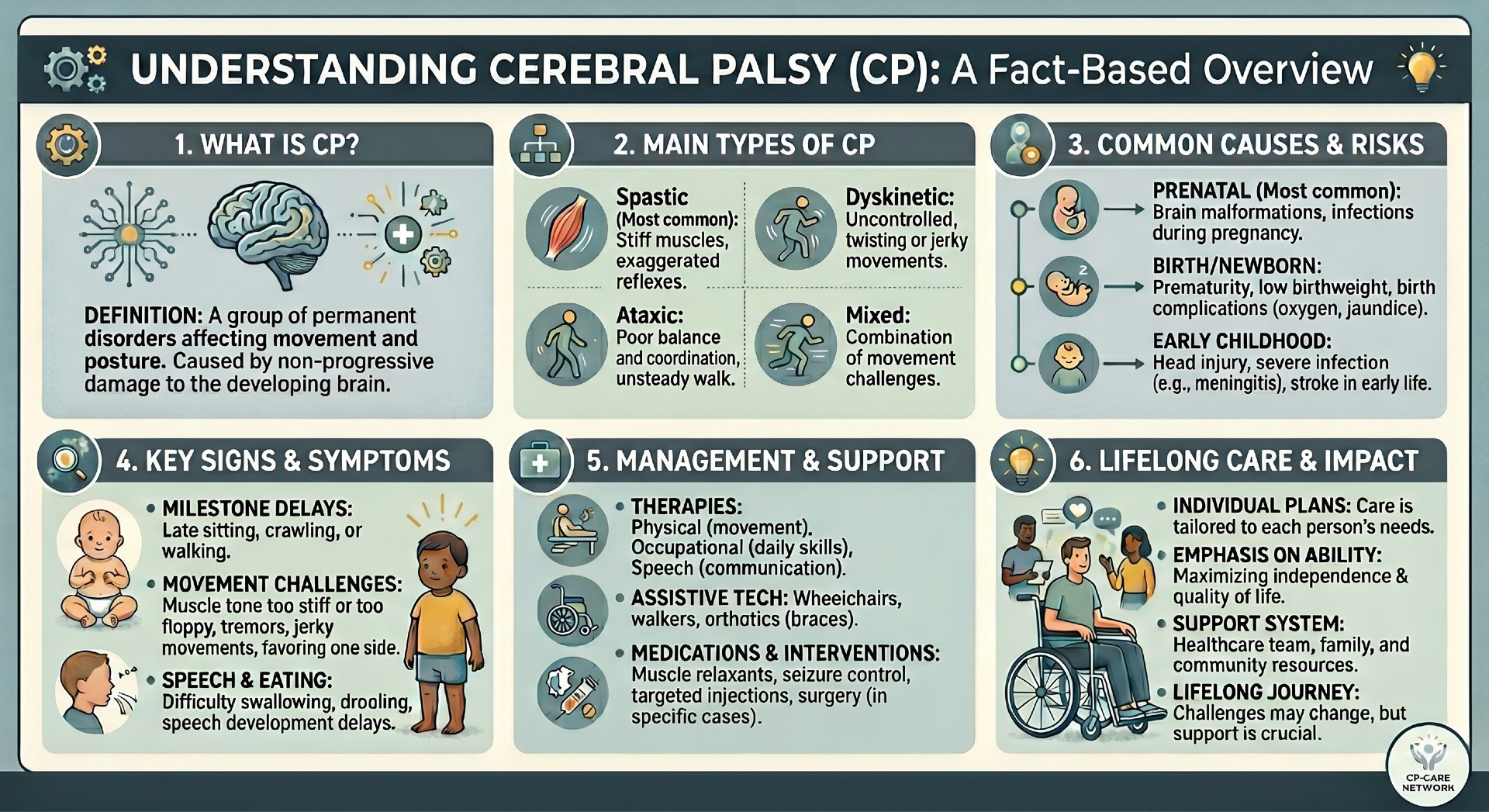
Cerebral palsy is not a single disease. It is a group of permanent movement and posture disorders caused by damage to the developing brain. The damage usually happens before birth, during birth, or in early infancy. The result is muscle stiffness, weakness, coordination problems, and often associated difficulties with speech, swallowing, vision, hearing, and cognition.
There are several types of cerebral palsy, including spastic, dyskinetic, ataxic, and mixed. Spastic cerebral palsy is the most common and is most often associated with birth injury.
When the Cause Was a Birth Injury
When cerebral palsy comes from a birth injury, the underlying mechanism is usually hypoxic-ischemic encephalopathy or HIE for short. With HIE, the baby’s brain was deprived of oxygen and blood flow during labor or delivery. Brain cells started dying. The damage that results is what we now call cerebral palsy.
A few specific things in the medical record tend to point toward a birth injury cause:
Abnormal Cord Blood Gas Values
When the umbilical cord is clamped after delivery, samples are often drawn from the blood in the umbilical cord. The arterial pH and base excess values tell you whether the baby was acidotic at birth, meaning their tissues had been deprived of oxygen and were producing lactic acid.
A cord arterial pH below 7.0 and base excess more negative than -12 are strong indicators of significant oxygen deprivation around the time of delivery. These numbers are usually documented in the delivery records. If your child’s cord blood gases looked like that you should consider the possibility your child was injured at birth due to substandard medical care, specifically a delay in delivery.
Low Apgar Scores That Stayed Low
Apgar scores measure how well the baby is doing at 1 minute, 5 minutes, and sometimes 10 minutes after birth. A low Apgar at 1 minute is common and usually not concerning by itself. A low Apgar that stays low at 5 and 10 minutes (especially below 5) is associated with neurological injury.
Need for Resuscitation at Birth
A healthy baby cries, breathes, and pinks up within seconds of delivery. A baby who requires extended bag-mask ventilation, intubation, chest compressions, or medications to be resuscitated had something go wrong. Sometimes that something was unavoidable. Sometimes it was the predictable consequence of a delivery that should have happened sooner.
Seizures in the First 24 to 48 Hours
Neonatal seizures within the first day or two of life are a hallmark of hypoxic-ischemic brain injury. They are often subtle, including eye fluttering, lip smacking, bicycling movements of the legs. These subtle signs are picked up on EEG monitoring in the NICU. If your child had documented seizures shortly after birth, that is a strong indicator of brain injury around the time of delivery.
Treatment With Therapeutic Hypothermia
Therapeutic hypothermia, also called brain cooling, is a treatment given to newborns with moderate to severe HIE. The baby’s body temperature is lowered for 72 hours to reduce the secondary brain damage that follows oxygen deprivation. If your child was treated with cooling therapy, the medical team believed they had suffered HIE. That belief is documented in the chart. It matters legally.
MRI Findings Consistent With HIE
A brain CT and MRI in the first week or two of life can show patterns of injury consistent with HIE. The brain imaging will show signs of involving the basal ganglia, thalamus, watershed regions, or cortex, depending on the severity and timing of the insult. Pediatric neuroradiologists can often distinguish HIE patterns from other causes of brain injury such as congenital malformations or prenatal stroke.
A Concerning Fetal Heart Tracing Before Delivery
The fetal heart monitor strip is the most important single piece of evidence in many birth injury cases. Late decelerations, prolonged decelerations, decreased variability, and bradycardia in the hours before delivery suggest the baby was being deprived of oxygen. When those patterns are present and the medical team did not act on them (by performing a timely C-section, repositioning the mother, stopping Pitocin, or other interventions) that is the fingerprint of a birth injury case.
When the Cause Was Probably Something Else
Some signs point away from birth injury and toward a different cause.
Normal cord gases and Apgar scores.
If your child’s cord blood pH was normal, Apgar scores were strong, and there was no need for resuscitation, the timing of any brain injury was probably not during delivery.
Brain abnormalities on prenatal imaging.
Sometimes a structural problem with the brain is seen on prenatal ultrasound or MRI. That suggests the injury or malformation happened before labor began.
Significant prematurity.
Babies born before 32 weeks have a higher baseline risk of brain injury from many causes. These include intraventricular hemorrhage, periventricular leukomalacia, and infection, none of which are typically attributable to malpractice. Premature birth complicates the analysis, though it does not necessarily rule out malpractice. In other words, just because your baby was born premature does not mean their injuries weren’t caused by negligence.
A confirmed genetic syndrome.
Genetic testing sometimes identifies a syndrome that explains the neurological problems independently of anything that happened during delivery. When that happens, the defense will use it. Sometimes correctly. Sometimes not; because a genetic risk factor does not always rule out an additional, preventable birth injury.
A documented prenatal infection.
Cytomegalovirus, toxoplasmosis, and other prenatal infections can cause brain injury. If maternal serologies and the baby’s own testing confirm a prenatal infection, that may explain some or all of the findings.
The Hard Cases
A lot of cerebral palsy cases are not “clean.” The records show some concerning fetal heart patterns but also some non-reassuring patterns that could have been ignored. The cord gases are abnormal but not catastrophic. There is no genetic finding, but there is also no MRI signature that screams HIE.
These cases are not impossible. They are not slam-dunks either. They get won or lost based on detailed expert analysis of the fetal heart tracing, the timing of decisions, what alternatives existed, and what the standard of care required.
Our firm has handled cases that looked weak on first glance and were strong once the records examined and the case worked up. We have also passed on cases that looked strong on first glance and turned out to have insurmountable causation problems. The only way to know which kind you have is to have the records reviewed by lawyers who handle these cases and the medical experts they trust.