

Article:

Signs Your Diabetic Ketoacidosis Was Misdiagnosed

Free Case Evaluation

Fill out the form below to schedule a free evaluation.

This field is for validation purposes and should be left unchanged.

Something Wasn’t Right

It may have started with feeling unwell, but it kept getting worse. Maybe you, or your child, were unbelievably thirsty and could not stop drinking. Urinating all the time. Then came the nausea, the vomiting, the belly pain. Maybe there was deep, fast breathing, and a strange fruity smell on the breath. Maybe came a heavy fatigue, confusion, or such drowsiness that you could barely stay awake. If this was your child, maybe they seemed limp, sick, and far worse than a normal stomach bug.

Brendan Lupetin, Esq.

Contact Us for a Free, Confidential Consultation

Article written by Brendan Lupetin, EsqBrendan is a managing partner in the law firm of Lupetin & Unatin, a medical malpractice law firm located in Pittsburgh and serving Western Pennsylvania.

Our practice is limited to high-value catastrophic cases because that is where we can do the most for our clients and for patient safety.

So you got help. You went to the ER or to an urgent care. You described the vomiting, the exhaustion, the constant thirst. And maybe they did not take it seriously enough. Maybe they called it a stomach bug, the flu, food poisoning, or dehydration. Maybe they gave fluids and anti-nausea medicine and sent you home. Maybe no one checked the blood sugar. The whole time, a lack of insulin was poisoning the blood with acids called ketones.

By the time someone checked the blood sugar and recognized it, the situation may have been dire. Diabetic ketoacidosis can lead to coma and death if it is not treated fast. Maybe you or your child survived a terrifying ICU stay. Maybe brain swelling caused lasting harm. Maybe you are reading this because someone you love did not survive. And you cannot stop asking: why didn’t they catch this in time?

That question matters. Diabetic ketoacidosis, or DKA, is a true emergency, and it can be deadly when missed. The tragedy is that a simple blood sugar check often catches it. When it is missed or treated too slowly, the harm is often catastrophic and often preventable. This article explains the warning signs that DKA was misdiagnosed. It explains the serious harm a delay can cause. And it explains what you can do next. If any of this sounds like your story, Lupetin & Unatin is here to help.
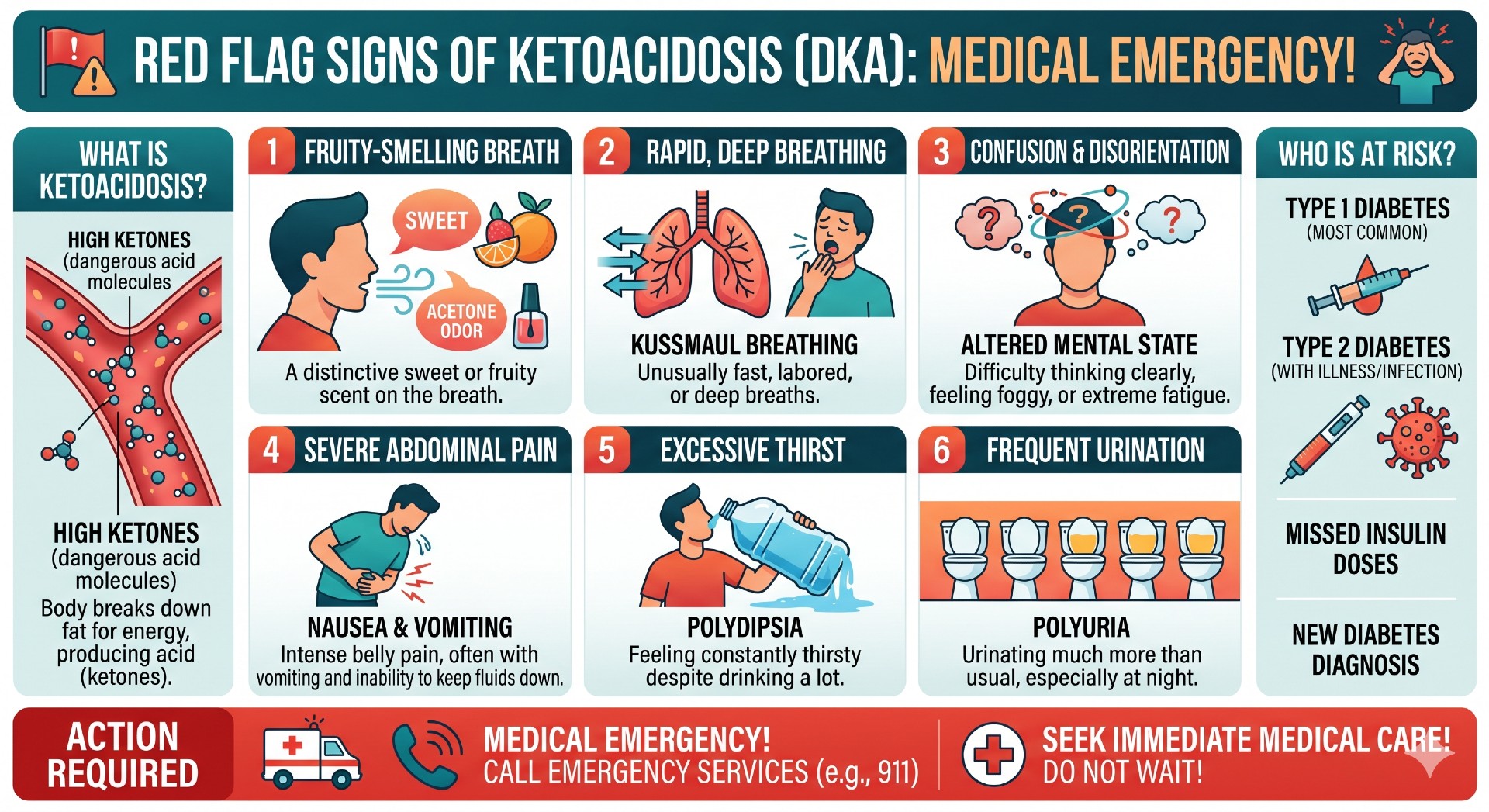
infographic: red flags of diabetic ketoacidosis

What Diabetic Ketoacidosis Is, in Plain Terms

Your body runs on sugar for energy, and it needs insulin to move that sugar into your cells. Diabetic ketoacidosis happens when there is not enough insulin. The sugar cannot get into the cells, so the body starts burning fat for fuel instead. That process makes acids called ketones. When ketones build up too fast, the blood turns dangerously acidic.

As the CDC explains, DKA is a serious complication of diabetes that can be life-threatening, and sometimes it is the first sign of diabetes in a person who has not yet been diagnosed. As the Cleveland Clinic notes, DKA has a severe and sudden onset and can develop within 24 hours, and even faster if a person is vomiting.

The key word is time. DKA gets worse quickly and can lead to coma and death. The good news is that it is very treatable when caught fast, with fluids, insulin, and careful monitoring. A simple blood sugar test and a check for ketones can reveal it. Catching it early is what saves lives.

Why Diabetic Ketoacidosis Gets Misdiagnosed

Here is the central trap. The early symptoms of DKA, nausea, vomiting, belly pain, and fatigue, look exactly like a stomach bug or the flu. So a busy provider may assume a harmless illness and send the patient home, especially a child, without ever checking the blood sugar. This is most dangerous in someone whose diabetes has not yet been diagnosed, because no one is thinking about diabetes at all.

But doctors are trained to look deeper, especially when symptoms do not add up. A patient who is very thirsty, urinating constantly, losing weight, breathing deeply, or unusually drowsy should raise concern. A simple finger-stick blood sugar test takes seconds. As the medical literature shows, a large share of DKA cases, especially in children, are the first sign of diabetes, and many are initially misdiagnosed as other illnesses. When a provider faces these warning signs and never checks the blood sugar, a deadly emergency can be missed.

Here are the common reasons DKA gets misdiagnosed:

  • Vomiting and belly pain were blamed on a stomach bug or the flu.
  • No one checked the blood sugar or tested for ketones.
  • The patient’s diabetes had not been diagnosed yet, so no one suspected it.
  • Heavy thirst, frequent urination, and weight loss were overlooked.
  • Deep, fast breathing and a fruity breath smell were not recognized.
  • Drowsiness and confusion were dismissed as just being tired or sick.

Warning Signs Doctors Are Supposed to Recognize

These are the warning signs of DKA. They are the same signs a careful provider should act on. Several together should prompt an immediate blood sugar check.

  • Extreme thirst and frequent urination. Classic signs of high blood sugar.
  • Nausea, vomiting, and belly pain. Often mistaken for a stomach bug.
  • Deep, fast breathing. The body trying to blow off acid.
  • A fruity smell on the breath. Caused by ketones.
  • Extreme fatigue, drowsiness, or confusion. Signs the body is in trouble.
  • Unexplained weight loss. Often seen in new, undiagnosed diabetes.
  • In children, looking far sicker than a simple bug would explain. Limp, hard to rouse, or breathing oddly.

When several of these signs are present, a careful provider should check the blood sugar and test for ketones right away. When these signs were brushed off and no blood sugar was checked, the diagnosis may have been missed.

Signs Your Diabetic Ketoacidosis Was Misdiagnosed

Below are the red flags. If you recognize several of these, it may be worth a closer look at the care that was given.

Your Vomiting and Belly Pain Were Called a Stomach Bug

DKA often causes vomiting and belly pain that look like a stomach virus. If you or your child were sent home with a “stomach bug” diagnosis and it turned out to be DKA, the question is whether a careful provider should have looked deeper.

No One Checked the Blood Sugar

A finger-stick blood sugar test takes seconds and can reveal DKA. If you had warning signs and no one ever checked your blood sugar, that simple missed step could be a serious failure in your care.

New, Undiagnosed Diabetes Was Not Considered

For many people, DKA is the first sign of diabetes. If the warning signs were there but no one considered diabetes because it had not been diagnosed before, that may point to a missed diagnosis.

Heavy Thirst, Urination, or Weight Loss Was Ignored

Extreme thirst, constant urination, and unexplained weight loss are classic signs of high blood sugar. If you reported these and no one connected them to diabetes, the diagnosis may have been missed.

Deep Breathing or Fruity Breath Was Overlooked

Deep, fast breathing and a fruity smell on the breath are specific warning signs of DKA. If these were present and not recognized, that delay can be serious.

You or Your Child Was Sent Home and Got Much Worse

You go in vomiting and exhausted. They send you home with a “bug.” Hours later, you are in a coma or fighting for your life. A simple blood sugar check might have caught it the first time.

You Suffered Lasting Harm

Sometimes the clearest sign that something went wrong is the outcome itself. People treated early usually recover fully. When treatment comes too late, the damage can be permanent. The next section covers the serious harm a delay can cause.

The Serious Harm a Diabetic Ketoacidosis Delay Can Cause

When DKA is not treated fast, the blood grows more acidic and the body shuts down. The longer the delay, the more harm it does. Here are the serious injuries and outcomes a missed or delayed diagnosis can cause.

Death. This is the gravest risk. Untreated DKA can be fatal. If you lost a loved one this way, your family may have a wrongful death claim.

Brain swelling (cerebral edema). This is a feared complication, especially in children. Swelling of the brain during DKA can cause permanent brain damage or death.

Permanent brain damage. A lack of oxygen and the effects of brain swelling can leave lasting harm to memory, thinking, and function.

Coma. As DKA worsens, a person can lose consciousness and slip into a coma.

Organ damage. Severe DKA can harm the kidneys and other organs.

Dangerous changes in body chemistry. Shifts in potassium and other minerals can cause life-threatening heart rhythm problems.

Long ICU stays. Severe DKA often means intensive care and a long, difficult recovery.

Lasting disability. When brain injury occurs, the effects can be permanent and life-changing.

Emotional trauma. Living through a child’s DKA crisis, or losing a loved one, leaves deep wounds. Many families struggle with anxiety, depression, and grief for years.

Many of these outcomes share one thing in common. They often trace back to time that was lost. Time that doctors had to act, and did not use.

When a Missed Diagnosis Becomes Malpractice

Not every bad outcome is malpractice. Doctors do not have to be perfect, and the early signs of DKA can look like a common illness. But doctors do have to meet a basic standard. That standard is the level of care a careful doctor would have given in the same situation.

To have a malpractice case, a few things usually need to be true. First, there was a doctor-patient relationship. Second, the care fell below the accepted standard. Third, that failure caused real harm. Fourth, the harm led to losses, such as medical bills, lost income, the loss of a loved one, or pain and suffering.

DKA cases often turn on a few key questions. Did the patient have warning signs like vomiting, extreme thirst, or weight loss? Was the blood sugar ever checked? Was new diabetes considered? Because a simple test can catch DKA, a failure to check when the signs were there can be the heart of a strong case. You can read more on our delayed diagnosis of diabetic ketoacidosis page. Proving it takes work, records, and the right medical experts. That is where Lupetin & Unatin comes in.

What You Should Do Now

If you think your diabetic ketoacidosis, or that of a loved one, was misdiagnosed, take these steps.

Get the medical records. You have a right to them. They hold the timeline of what happened and when. In these cases, what symptoms were recorded and whether a blood sugar was checked are often the heart of the case.

Write down what you remember. Note when the symptoms started, what they were, and what you told the staff. Note whether anyone checked a blood sugar. Memory fades, so do this soon.

Do not wait too long to ask questions. Every state has a deadline for filing a malpractice claim. In Pennsylvania, that deadline is usually two years. There are some exceptions, including special rules for children. The clock can run out fast, so acting early protects your rights.

Talk to a lawyer who knows these cases. DKA claims are complex. They need medical experts and a deep understanding of emergency and pediatric care. A general lawyer may not be the right fit. A firm focused on medical malpractice will know what to look for.

How Lupetin & Unatin Can Help

We are Lupetin & Unatin. We are a Pittsburgh medical malpractice firm. We focus on serious injury and death from medical errors. Cases involving the missed and delayed diagnosis of diabetic ketoacidosis are part of our work. We know how these errors happen. We know how hospitals defend them. And we know how to hold them accountable.

We have handled catastrophic delayed-diagnosis and wrongful death cases. We understand how a treatable emergency can turn fatal when the warning signs are missed and the clock runs out. We know the medicine, and we know how to prove what a careful doctor should have done.

We take a small number of cases so we can give each one real attention. We work on contingency. That means you pay nothing up front. You pay nothing unless we win. There is no risk in finding out if you have a case.

You deserve answers. You deserve to know if this suffering or loss could have been prevented. A short conversation can tell you a lot.

Frequently Asked Questions

You may not know for sure on your own. That is normal. The answer is usually in the medical records. We look at what symptoms were reported, whether the blood sugar was ever checked, whether new diabetes was considered, and how long everything took. The early signs can look like a stomach bug, but a simple test can catch DKA, and the law asks what a careful doctor would have done with the same information. A careful review tells us whether the care fell below the standard. That review costs you nothing.

In most cases, the deadline in Pennsylvania is two years. For a wrongful death claim, that period generally runs from the date of death. For children, special rules can extend the deadline. These rules are tricky, especially in cases involving a child or a death. The safest move is to call us soon so we can protect your rights before time runs out.

Nothing up front. We work on contingency. That means we only get paid if we win money for you. There is no fee to talk with us and no fee to review your case. If we take your case and do not win, you owe us no attorney fee. This lets you seek justice without financial risk.

Free Consultation — No Fee Unless We Win

Lupetin & Unatin, LLC represents Pennsylvania patients harmed by physicians who failed to meet the standard of care.

This article is provided for general informational purposes and is not legal or medical advice. Reading it does not create an attorney-client relationship. Every case is different. If you have questions about your own situation, speak with a qualified attorney.

What can we help you find?

Generic selectors
Exact matches only
Search in title
Search in content
Post Type Selectors