
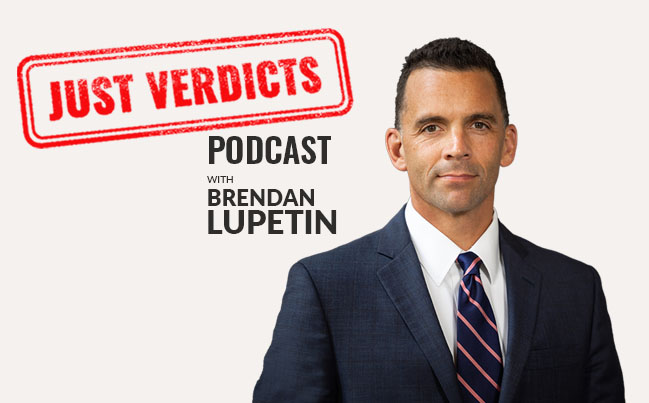
When It’s Inevitable that the Product Will Fail, with Dave Kwass
Episode Summary
When a 900-pound flail mower crushed a Delaware Department of Transportation mechanic, the defense claimed it was his fault and insisted his return to work proved minimal injury. When Dave Kwass sued the mower manufacturer, he exposed defense lies and revealed missing evidence. He also took jurors on a journey through the company’s history – including the “bizarre moment” when it rejected a design modification that would have made the mower safer because it would have increased repair costs. As Dave explains to host Brendan Lupetin, he set up the “narrative inevitability” that the flawed machine would injure someone. “The ‘Jaws’ music has been playing,” Brendan observes, “and they know that the attack is inevitable.” The jury awarded Dave’s client $11 million.
Produced and Powered by LawPods.
Episode Preview
- Dave Kwass has built a national product liability practice by traveling the country, developing expertise through the American Association for Justice Crane and Aerial Lift Litigation Group, and becoming known as “the airplane lawyer” who tries cases across multiple jurisdictions.
- Carlos Pinot Figueroa, a heavy machinery maintenance mechanic for the Delaware Department of Transportation, was crushed by a 900-pound flail mower when it jumped out of its travel lock during a routine repair.
- The defense claimed that an engineering study had previously considered the idea of a design modification and rejected it due to a 51% failure rate. But Dave revealed that the defense could produce no documentation of this alleged study.
- In his opening and closing, Dave focused on a simple rule that “a company that makes machines can never needlessly endanger the people who work with them.”
- Dave used testimony transcripts to expose a defense lie about how much Carlos could lift after surgery to repair his injury.
- Despite Carlos returning to full duty work as a heavy machinery mechanic 18 months after his cervical fusion surgery, the jury awarded $7 million in damages plus $4 million in loss of consortium.
- The case was tried under a negligence theory rather than strict liability because Delaware does not recognize strict liability in products cases.
Subscribe to Just Verdicts Podcasts
Refer a Case
Fill out the form below to refer a case.