

This guide explains, in plain language, what neonatal hypoglycemia is, which babies are at risk, why screening and treatment matter so much, and how low blood sugar can lead to brain injury. It is written for parents and families who want to understand what happened to their baby, or what to watch for. We have tried to make it clear and complete without assuming any medical background.
If you believe your child’s brain injury may have been caused by low blood sugar that should have been caught, this guide pairs with our companion article on the signs your child’s hypoglycemia brain injury was caused by negligence. This first article explains the medicine. The second explains the law.
What Neonatal Hypoglycemia Is
Glucose, a kind of sugar, is the body’s main fuel. The brain depends on it almost completely. Before birth, the baby gets a steady supply of glucose from the mother through the placenta. The moment the umbilical cord is cut, that supply stops. The newborn must now keep its own blood sugar up, using stored energy and feeding, until everything balances out.
Neonatal hypoglycemia means the baby’s blood sugar has fallen too low during this transition. A small, brief dip is normal in the first hours of life and corrects itself as the baby begins to feed. The danger is when the blood sugar goes too low, stays low, or keeps coming back down, especially in a baby who is already at risk.
As MedlinePlus explains, most of a newborn’s glucose is used by the brain, which is why low blood sugar in a newborn must be taken seriously. The condition is common and very treatable. The harm comes not from the low sugar itself, but from low sugar that is not caught and corrected in time.
Why Some Babies Are at Risk
Some newborns are much more likely to develop hypoglycemia than others. This is the single most important idea in this entire guide, because the babies at risk are known in advance. Doctors and nurses are trained to identify them and to watch their blood sugar closely.
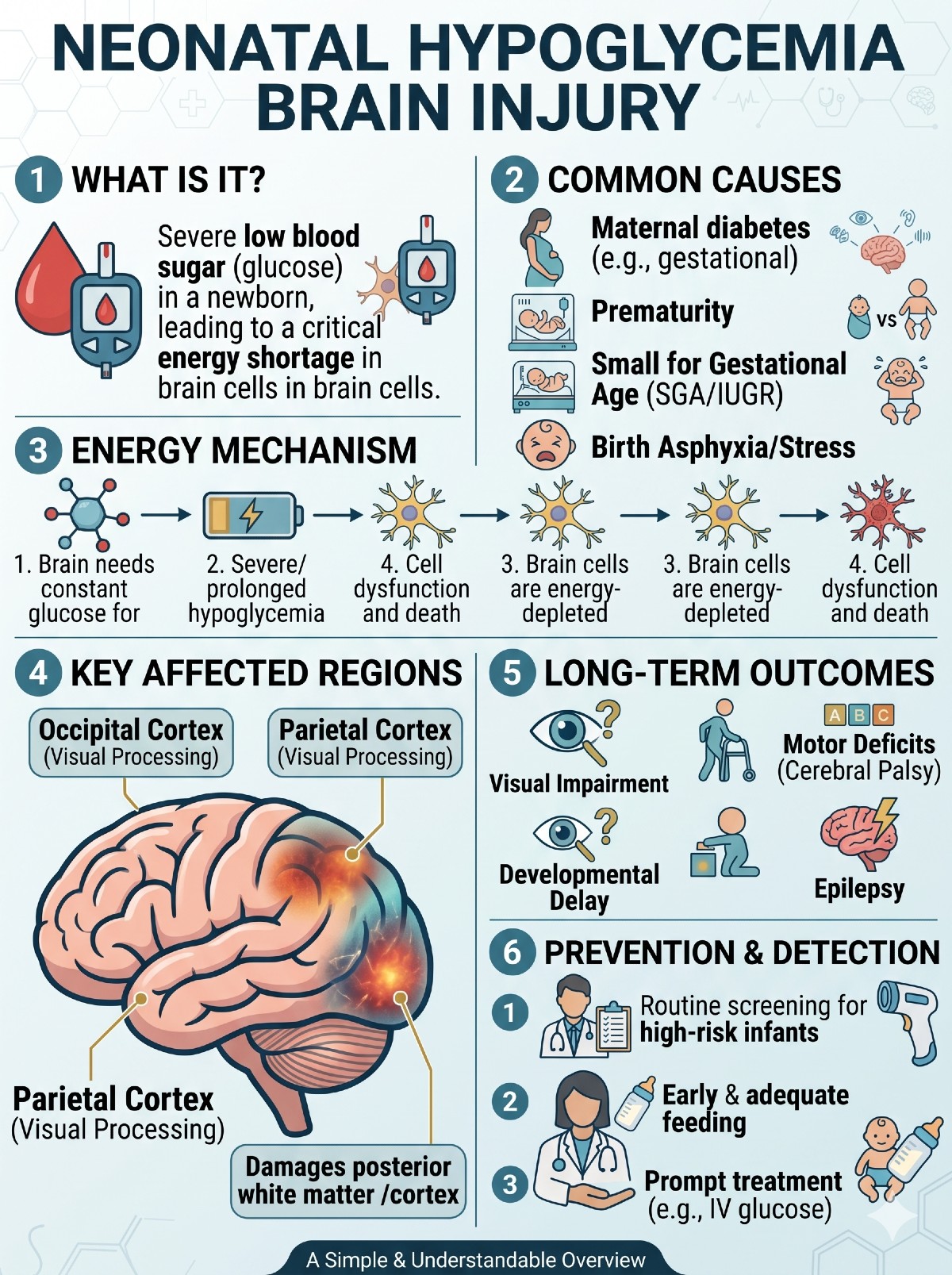
According to Stanford Medicine Children’s Health, the babies most likely to have low blood sugar include those born to mothers with diabetes (including gestational diabetes), babies who are large for their gestational age, babies who are small for their gestational age or growth-restricted, premature babies, and babies born under significant stress, such as those who did not get enough oxygen during birth.
Other risk factors include a mother treated with certain medications, infection, low body temperature, and certain genetic or metabolic conditions. Babies who make too much insulin, the hormone that lowers blood sugar, are especially at risk. The most common reason for this is a mother with diabetes whose blood sugar was high during pregnancy.
Here is why this matters so much. Because these risk factors are known, the standard of care is to screen at-risk babies with simple heel-stick blood sugar tests in the first hours of life, before any harm can happen. A baby with risk factors is not supposed to slip through. The system is designed to catch them.
The Hidden Danger: Hypoglycemia Often Has No Obvious Symptoms
One of the most important and frightening facts about neonatal hypoglycemia is that it is often silent. A baby can have dangerously low blood sugar and look completely fine. The medical literature is clear that the symptoms do not reliably match the blood sugar level, and that many hypoglycemic babies show no outward signs at all.
When symptoms do appear, they can be easy to miss or mistake for normal newborn behavior. According to Stanford Children’s Health, the signs can include jitteriness or shakiness, a bluish or pale color to the skin, breathing problems such as pauses in breathing (apnea), grunting, or fast breathing, a low body temperature, floppy muscles or poor muscle tone, poor feeding or no interest in feeding, lethargy or a lack of energy, and a weak or high-pitched cry. In more severe cases, a baby may have seizures or become unresponsive.
Because the condition is so often silent, you cannot rely on a baby “looking okay.” This is exactly why screening the at-risk baby with a blood test, rather than just watching, is the heart of safe newborn care. Waiting for symptoms can mean waiting until brain injury has already begun.
How Neonatal Hypoglycemia Is Supposed to Be Managed
There is a well-established approach to protecting newborns from the harm of low blood sugar. It comes from groups like the American Academy of Pediatrics (AAP), and while the exact numbers and timing vary between guidelines, the core principles are consistent.
Identify at-risk babies. The care team should review the pregnancy and delivery for risk factors, and flag babies who need screening.
Screen early and repeatedly. As described in clinical guideline reviews summarized by StatPearls, the AAP recommends screening at-risk babies, and babies with symptoms, with blood glucose checks during the first 12 to 24 hours of life, when the risk is highest. Testing usually begins within the first hours after birth.
Feed early. Early and frequent feeding, whether breast milk or formula, helps keep blood sugar up and is often the first step for mild cases.
Treat promptly. When the blood sugar is low, treatment may include feeding, a dextrose (sugar) gel placed inside the cheek, or, for lower or stubborn levels, glucose given through an IV. Severely affected babies may need care in the neonatal intensive care unit (NICU).
Keep monitoring. Blood sugar should be rechecked to make sure treatment worked and the level stays safe. A baby is generally not sent home until the blood sugar is stable.
When this process is followed, the vast majority of babies do well. The failures that lead to brain injury usually involve a breakdown somewhere in this chain: a risk factor missed, screening not done, a low result not acted on, or a baby discharged too soon.
How Low Blood Sugar Injures the Brain
The newborn brain runs on glucose. When blood sugar drops too low and stays there, brain cells cannot get the fuel they need, and they begin to be damaged. This is how prolonged or severe hypoglycemia causes brain injury.
The medical evidence on this is well established. As researchers note in a review published through the National Institutes of Health, severe or prolonged hypoglycemia, while uncommon, can cause severe brain injury with lifelong disability. The areas of the brain affected can show up later on imaging, and the injury can lead to lasting problems with movement, learning, and development.
It is worth being honest about the science here, because it matters in these cases. There is genuine debate in medicine about exactly how low, and for how long, blood sugar must be to cause harm, and mild, brief dips that are corrected quickly are usually not harmful. But severe, sustained, or repeated hypoglycemia, especially when it is left untreated, is a recognized cause of permanent brain damage. The dispute at the margins does not change the core duty: find the at-risk baby, check the blood sugar, and treat low levels promptly.
The Lasting Harm a Brain Injury Can Cause
When neonatal hypoglycemia injures the brain, the consequences can last a lifetime. The specific outcome depends on how low the blood sugar went, how long it lasted, and which parts of the brain were affected.
Cerebral palsy. Brain injury from hypoglycemia can cause cerebral palsy, a disorder of movement and posture that can affect a child’s ability to walk, move, and control their muscles.
Developmental delays. Many affected children are slower to reach milestones like sitting, crawling, walking, and talking.
Learning disabilities and cognitive problems. Hypoglycemic brain injury is associated with lasting difficulties with learning, memory, and thinking, sometimes not obvious until school age.
Seizure disorders (epilepsy). Damage to the brain can cause a lasting seizure disorder.
Vision and hearing problems. Certain patterns of injury can affect the parts of the brain that process sight and sound.
Behavioral and emotional challenges. Some children face lasting attention, behavior, and emotional difficulties.
In the most severe cases, the injury can be profound and require a lifetime of care. Some of these harms are not visible at birth and only become clear months or years later, as a child misses developmental milestones.
When Hypoglycemia Brain Injury Becomes a Legal Question
Neonatal hypoglycemia is common, and having it is not anyone’s fault. The legal question is never simply whether a baby had low blood sugar. The question is whether the care team did what a careful team is supposed to do: identify the at-risk baby, screen properly, recognize low blood sugar, and treat it in time.
When a baby with clear risk factors is never screened, or a low blood sugar reading is ignored, or a struggling baby is sent home too soon, and the baby suffers a brain injury as a result, that can be the basis of a malpractice claim. These are difficult questions that require the medical records and expert review to answer.
If you are asking these questions about your own child, our companion article walks through them in detail: signs your child’s hypoglycemia brain injury was caused by negligence. And if you would like to talk to someone, the birth injury attorneys at Lupetin & Unatin are here to help.